

Best Deduction Management Software: 7 Tools Compared

Every week, deductions land across three distributor portals as PDFs. Your team pulls, sorts, and groups them by hand. Then month-end close arrives and the numbers still don't add up.
That process doesn't scale for growing brands. You're behind because the workflow wasn't built for this volume. Mid-market CPG brands selling through UNFI, KeHE, and Kroger need deduction management software built for distributor PDF workflows. They need a two-week go-live, not a six-month IT project.
The right platform handles all three distributor formats without an enterprise resource planning (ERP) platform. Your team closes faster and recovers more on disputed deductions. Invalid claims stop getting absorbed cycle after cycle. Here's how the best deduction management software for CPG brands compares.
Main Takeaways
- Deduction management software processes and recovers deductions after they arrive. Trade promotion management platforms plan promotions before they run.
- Distributor deductions from UNFI and KeHE arrive as short-paid remittances with PDF backup. Retailer chargeback tools are built for structured portal data.
- Enterprise platforms like HighRadius are built for SAP and Oracle environments with implementations that run three to six months. They're a poor fit for lean mid-market teams.
- Many buyers overlook ERP flexibility and distributor connectivity. Both gaps lead to choosing platforms built for someone else's workflow.
- Vividly and Promomash appear in deduction management searches. Both are trade promotion platforms where deduction handling is secondary.
What to Look for in Deduction Management Software for CPG Brands

Five criteria matter most for CPG brands: distributor connectivity, AI-driven extraction, ERP flexibility, implementation timeline, and pricing transparency. Most buyers rate these platforms on generic accounts receivable (AR) features. If you sell through UNFI, KeHE, or Kroger, your checklist needs to be more specific.
Five Selection Criteria for Mid-Market CPG Teams
- Distributor connectivity. Can the platform pull deduction data straight from UNFI, KeHE, or Kroger portals? Or is your team still downloading PDFs by hand every week?
- AI-driven extraction. Does the AI handle the document types CPG brands actually deal with? Those include remittance files, proof of delivery (POD), and deal sheets. POD is the delivery confirmation distributors require for dispute resolution. Deal sheets are the agreed promo terms your team matches deductions against.
- ERP flexibility. Can the platform run on its own for teams on QuickBooks or no ERP at all? Or does it need SAP or NetSuite before it can run? A 2025 Billing Platform survey found that 80% of finance leaders call AR automation a priority. Yet only 3% have fully automated it. IT backlog is a top bottleneck, making ERP flexibility key.
- Implementation timeline. Are you looking at a two-week go-live or a six-month IT project? For a lean team, this decides whether you solve the problem this quarter or next year.
- Pricing transparency. Can you see the price before talking to sales? Or is the first number you hear during a contract talk?
It's also important to confirm you're looking at the right system for your needs. Deduction management software processes, sorts, and recovers deductions after they arrive. Trade promotion management (TPM) platforms plan and budget promotions before they run. You don't need a TPM to start managing deductions.
Beyond software type, confirm if the platform fits your use case. If your review checklist skips distributor connectivity and ERP flexibility, you'll end up choosing platforms built for enterprise AR departments. You'll find the mismatch three months into implementation.
7 Deduction Management Platforms Compared

Alt text: Close-up of a professional flipping through tabbed documents while comparing deduction management platforms.
The table below maps ERP requirements and implementation timelines side by side across seven platforms. Pricing and availability should be verified with each vendor. These reflect published or reported figures as of August 2026.
Tool-by-Tool Breakdown
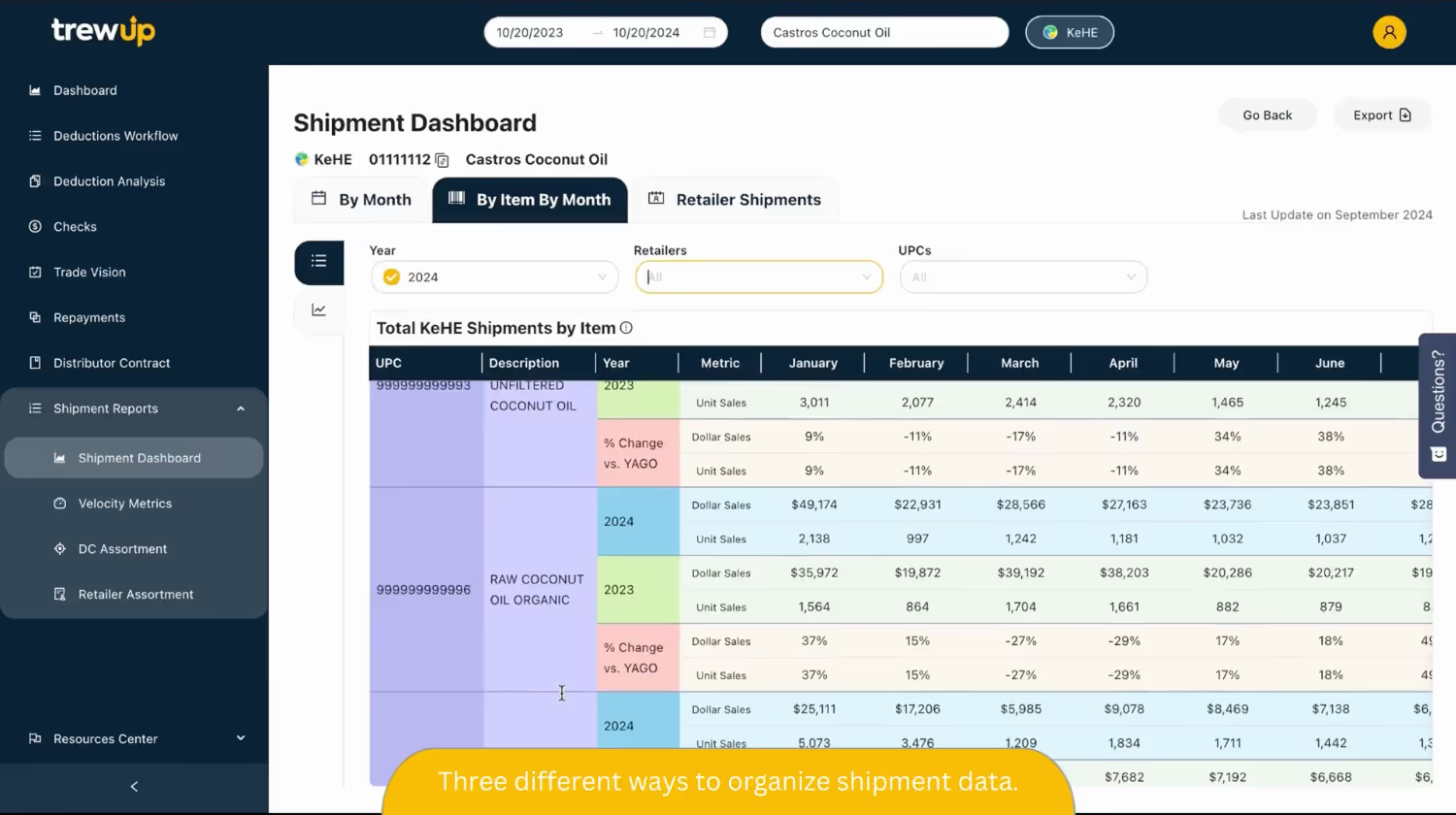
TrewUp is a purpose-built deduction management platform for mid-market CPG brands selling through UNFI, KeHE, and Kroger. Prebuilt distributor integrations connect to the portals your team currently logs into by hand. The platform runs without an ERP.
Most teams go live in about two weeks, and the Emerging tier starts at $699 per month. The tradeoff? TrewUp is a newer platform with a smaller customer base than established players. Best for CPG brands ($5M to $50M) with lean finance teams and a distributor-heavy channel mix.
HighRadius is an enterprise-grade AR automation suite with AI-driven deduction matching. It's built for large groups running SAP or Oracle with dedicated IT teams. The platform covers the full AR lifecycle, which makes it powerful at scale.
The downside is enterprise pricing that puts it out of reach for most mid-market teams. There's also a lengthy implementation process. Best for enterprise AR departments at companies above $500M in revenue.
Esker uses AI-driven document capture and workflow automation to streamline accounts receivable. It typically integrates with an ERP and other finance systems as part of implementation. Its focus is generic AR automation with no CPG-specific distributor workflows. Best for document-heavy AR operations at mid-to-large companies.
iNymbus applies robotic process automation (RPA) to retailer chargebacks, mainly from Amazon and Walmart. It offers strong automation for portal-based dispute submission. The limit is focus: iNymbus is built primarily around retailer chargeback workflows rather than distributor deduction processing. Best for brands managing high-volume retailer chargebacks.
Gaviti is an AR collections platform that includes deduction management as an add-on module. It offers KPI tracking and a customer-facing portal. While it supports deduction workflows, its focus is broad AR automation. CPG-specific distributor processes take second place. Pricing is custom. Best for mid-market AR teams that prioritize collections alongside deductions.
Vividly is a trade promotion management platform that includes deduction tracking. Its deduction features tie disputes back to the promotions that generated them. The catch: Vividly is TPM-first. Deduction management is a feature within a broader product. Best for CPG brands that need TPM and want deduction visibility in the same platform.
Promomash combines trade promotion management and deduction management in one platform. It helps brands plan promotions before they run and manage deductions after they happen. The tradeoff is implementation. Setup typically takes two to four months. Custom quotes may be higher as well. Best for CPG brands looking for both capabilities in one system.
The gap across this market shows up in the table:
- Enterprise tools are built around ERPs and months of implementation.
- Retailer chargeback tools ignore distributor workflows.
- TPM platforms treat deductions as a secondary feature.
The platform you pick should match your channel mix and team size.
How Distributor Deductions Differ from Retailer Chargebacks

Distributor deductions from UNFI, KeHE, and Kroger arrive in a very different format than retailer chargebacks from Amazon or Walmart. Most deduction management platforms are built for the retailer side. If your deduction volume runs through distributors, the platform you choose needs to handle PDFs, remittance files, and deal sheet matching.
Retailer chargebacks from Amazon and Walmart are typically portal-based. They use structured data, standard reason codes, and automated dispute submission through the retailer's vendor portal. That's the workflow iNymbus and similar RPA tools are designed to automate.
That's where distributor deductions become more complicated. UNFI and KeHE deductions arrive as short-paid remittances with PDF backup documents. Your team has to match that data to proof of delivery, deal sheets, and promotional agreements. KeHE's vendor policies clearly allow set-off. A 2024 U.S. court filing shows the policy reserves KeHE's right to deduct any amounts a vendor owes from the payments due to that vendor. The cash impact hits before your team sees the full backup.
Some distributors are making this data easier to access. UNFI now gives suppliers access to sales, inventory, and deduction data through its Crisp-powered portal. Access alone doesn't solve the problem. Your team still has to sort the data and match it to deal sheets and supporting documents. TrewUp is the only platform in this set built specifically around UNFI, KeHE, and Kroger distributor workflows, connecting directly to those portals and replacing the weekly manual downloads.
Put Your Deduction Process on Solid Ground with TrewUp

You now have a framework for choosing deduction management software. It matches your distributor relationships, team size, and go-live timeline. The selection criteria, comparison table, and distributor workflow breakdown give you what you need to choose with confidence.
We built TrewUp to connect directly to UNFI, KeHE, and Kroger portals. It processes the PDFs, remittance files, and deal sheets your team currently handles by hand. Every deduction gets sorted the week it arrives. Your team closes with numbers they can defend. You recover margin from disputes you would have written off under the old backlog.
See how TrewUp handles deduction processing for CPG brands selling through UNFI, KeHE, and Kroger today.