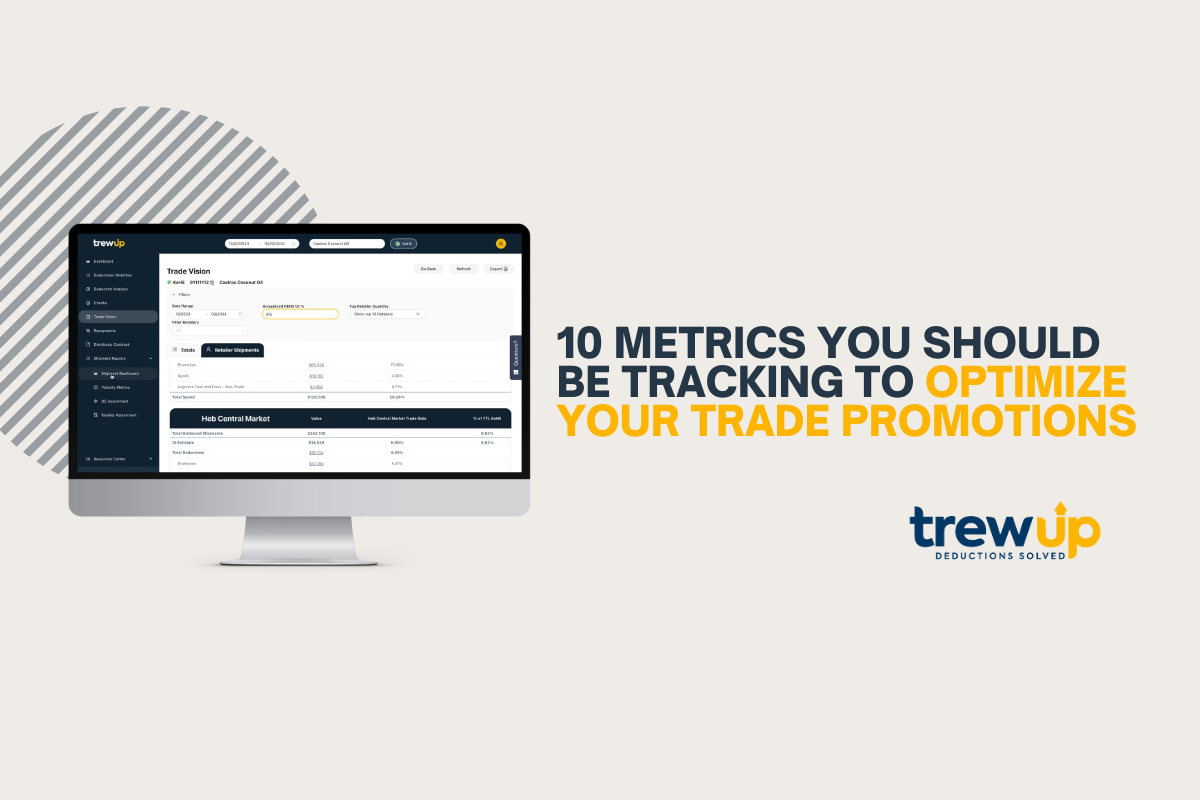

When it comes to trade promotions, you don’t need more promotions—you need better ones. And the only way to run better, more profitable events is to measure what actually works.
Most brands make the mistake of relying on gut instinct or topline sales numbers to judge performance. But without the right data, it’s easy to keep throwing money at tactics that don’t move the needle.
So what should you be tracking?
Below are 10 key metrics every brand should monitor to measure event performance, maximize ROI, and make smarter trade spend decisions.
1. Base Units (Non-Promoted Sales)
Start with your baseline: how many units do you typically sell when you're not on promotion? Break this down by units per store per week for better accuracy and benchmarking.
2. Units Sold During the Promotion
Next, look at total units sold during the promotional period. This will help you calculate your lift and understand how the event influenced buyer behavior.
3. Incremental Unit Lift
Subtract your baseline units from your promo-period units. This is your true incremental lift—the additional units moved because of the promotion.
Formula: Promo Units – Base Units = Incremental Lift
4. Promo Spend Per Unit
Track the total spend per unit across all vehicles: off-invoice (OI), scanbacks, MCBs, and any other promotional costs. This will help you understand the cost-effectiveness of each unit sold.
5. Points of Distribution by Retailer
How many stores carried your product during the promotion? Knowing your points of distribution (POD) gives you context to evaluate performance and calculate meaningful metrics like units/store/week.
6. Administrative Fees
Promotions often come with hidden costs—retailer setup fees, distributor charges, and deductions. Don’t overlook these fees; they directly affect your true spend and ROI.
7. Additional Event Costs
Beyond discounts and fees, what else did you invest in the event? Think ad placements, display materials, or EDLP overlays. Capture all costs for a holistic view of your spend.
8. Post-Promotion Baseline
Did your baseline shift after the promotion? An increase may signal that the event successfully drove trial, repeat purchases, or market share. A flat or declining post-promo baseline may tell a different story.
9. ROI of the Event
Combine the above metrics to calculate return on investment. Did the event perform above, at, or below break-even? ROI is the ultimate test of whether the spend paid off.
10. Trade Spend by Retailer
Zoom out and look at your spend by retailer. Track total trade dollars, revenue, and calculate your trade rate (spend ÷ revenue). This helps identify where your dollars are working hardest—and where you may be over-investing.
Why This Matters
When you’re not tracking these 10 metrics, you’re flying blind. You may be spending heavily on promotions that feel successful but are actually hurting your margins. Worse, you could be under-investing in events that are quietly driving real ROI.
Brands that track these metrics are better prepared going into retail meetings and trade shows. They know what worked, what didn’t, and can negotiate from a place of confidence. One brand we work with reported that once they had these insights, they were able to sell more at higher margins—a win for both them and their retail partners.
Final Thought
It’s easy to fall into the trap of “run and gun” promotions. But the most successful brands treat their promotional calendars like a business strategy—grounded in data, measured in ROI, and constantly optimized.
Want help putting this into practice? Dive into our free Promo ROI calculator here or reach out—we’d love to help you get the clarity you need to grow smarter.