

Your controller books a cautious write-off at close. The deduction backlog is too deep to check before the dispute window expires. Accruals rely on last quarter's averages instead of processed claims. So the numbers you report reflect guesswork, not actuals.
CPG deductions management shapes whether your month-end close reflects reality or estimates. Backlog speed controls accrual accuracy and close confidence.
Deduction management is a financial reporting problem as much as it is a revenue recovery problem. The benchmarks and triage logic below help you assess your workflow and spot which claims warrant dispute.
Main Takeaways
- Deductions arrive across different portals in different formats with different dispute timelines.
- Unprocessed deductions skew accrual estimates and create close-time friction. Neither Sales nor Finance can see which claims are valid or disputed.
- Margin-destroying breakdowns happen between categorization and dispute. It’s where validation gets skipped and recovery windows expire.
- If your team logs 10+ hours per week manually sorting deductions, or sits on claims 90+ days old, the bottleneck is workflow capacity.
What Is Deductions Management?

Deduction management covers the full lifecycle of trade deductions. This includes:
- Capturing claims from retailer and distributor portals
- Sorting by type
- Checking against contract
- Disputing invalid claims
- Recovering cash
In practice, trade deductions land across UNFI, KeHE, Kroger, and other portals on different schedules. They arrive in different file formats, with different reason code systems and dispute timelines.
UNFI might categorize a shortage deduction as "QTY-SHORT" while KeHE calls it "SHORTAGE" and Kroger uses "SH." The same deduction type gets tagged three different ways. This makes it nearly impossible to roll up deduction trends across your distributor base without manual re-mapping.
Types of Trade Deductions
- Pre-authorized deductions: Planned trade spend your team budgeted for. This includes billbacks, scans, and MCBs. These should reconcile cleanly against your promotion agreements.
- Unauthorized or excessive deductions: Claims that don't trace back to an agreed-upon promotion. Usually these are for returns, shortages, or pricing gaps. These warrant a second look to verify they're justified. A shortage deduction might be legitimate if your team shipped fewer cases than ordered. The fix isn't disputing the charge but tightening ops processes to prevent future shortfalls.
- Preventable deductions: Compliance penalties triggered by late delivery, labeling issues, or case-fill shortfalls.
- Post-audit deductions: Retroactive claims from paid third-party auditors. These can surface years after the original transaction. Up to half may be wrong, inflated, or duplicate. Your best defense is to keep signed BOLs, promotion agreements, and deduction backup for at least three years.
Unprocessed claims force your controller to book cautious write-offs because there isn't time to check them. They skew accrual estimates. They cause friction between Sales and Finance. Neither team can tell which deductions are valid, disputed, or resolved.
A 2024 Promotion Optimization Institute study found 88% of CPG manufacturers struggle to manage enterprise trade spend. When trade spend data doesn't reconcile with deduction lines, Finance closes on estimates. Then the team spends WD+5 debating Sales over numbers neither side fully trusts.
Every month the backlog grows, accrual estimates drift further from actuals. The gap between what Finance reports and what Sales expects gets wider.
The CPG Deductions Management Process

Six steps make up the end-to-end deductions management process.
1. Foundation: Set Up Before You Triage
Establish the contract library, ownership, and cadence that prevent disputes from stalling out. Create a shared, searchable folder for all:
- Supplier agreements
- Routing guides
- Fee schedules
- Promo contracts
Organize these by retailer and date range so backup is accessible during dispute windows.
Assign one person to review deductions and track dispute status. This owner needs portal access for UNFI, KeHE, Kroger, and email access where deductions are posted. Set weekly or bi-weekly reviews, prioritizing by dollar amount to focus on claims with the biggest margin impact.
2. Capture: Pull Claims From Every Portal
Pull deduction claims from every retailer and distributor your brand touches. Selling through UNFI, KeHE, and Kroger means monitoring multiple channels. Each has different file types, delivery cadences, and reason code systems. Most teams download PDFs manually, which doesn't scale as volume grows.
3. Categorize: Tag by Reason Code and Type
Tag each deduction with the right reason code. This helps separate trade promotion activity from compliance fees, damages, and pricing adjustments. Consistent categorization keeps accruals accurate and makes disputes solid. Use your contract library to compare deductions against agreements, spotting unauthorized claims quickly.
4. Validate: Match Claims Against Backup
Check each line item in the deduction backup against your promotional contracts and agreements. This shows whether the deduction matches what you committed to or if there's a discrepancy worth investigating. Your organized contract library makes this step faster and more reliable.
5. Dispute: File Disputes Before Windows Close
Dispute invalid claims before the retailer's dispute window closes. Every partner sets its own deadline, and none are open to debate. Your designated owner should validate which deductions are invalid, then collect the documentation needed to prove it. This might include BOLs, promotion agreements, or proof of delivery. Once backup is assembled, file the dispute before the window expires. Track dispute status by retailer to ensure no claim goes unassigned.
6. Recover and Report: Close on Actuals
Log dispute outcomes by type, retailer, and dollar value. Track remittances from successful disputes and route resolved deduction data back into your accruals and forecasts. Generate reports based on spend by retailer and deduction type to spot patterns and prevent future margin loss.
Deduction Management Challenges and the Finance-Sales Alignment Gap

Even teams that know the process well run into the same deduction management challenges:
- Volume across multiple portals: Data arrives in different formats, on different schedules, from different systems. Downloading PDFs and pulling line items by hand doesn't scale as deduction volume grows.
- Matching deductions to the source promotion: A billback that shows up three months after a promotion ended is hard to check. There's often no shared trail linking the promo to the claim.
- Missed dispute windows: Backlogs push deductions past their recovery deadline. These aren't write-offs by choice; they're write-offs by default.
- Accrual accuracy at close: Unprocessed deductions make it hard to separate expected trade activity from disputable claims. Your accruals become guesses.
Cross-team misalignment makes every one of these problems worse. Sales enters a promotion in one system. Finance reconciles the resulting deduction months later in a different one. Neither team shares a view of whether that deduction is valid, under dispute, or already written off. Sales sees working trade. Finance sees margin erosion it can't explain.
A good deductions workflow needs three things:
- Promotion data that both teams can access
- Unified deduction status tracking visible in a single place
- Clear dispute ownership so no claim sits unassigned past its recovery window
Deduction management best practices only hold up when Sales and Finance work from the same data. Both teams must agree on the same definitions.
The gap between categorization and dispute is where recoverable deductions become permanent write-offs. That's also where Sales and Finance start telling different stories about what the numbers mean.
When Manual Workflows Stop Working: Self-Assessment, KPIs, and What to Do Next

When your team spends more hours processing deductions than studying them, the workflow has hit its ceiling. These warning signals and KPIs will show you where you stand and whether the fix is a process tweak or a system change.
A workflow has fallen behind volume if three or more of these apply:
- Your team logs more than 10 hours per week downloading from portals and sorting deductions by hand.
- You're sitting on deductions older than 90 days with no assigned owner and no dispute status.
- Unresolved deduction backlogs roll from one period into the next at every close.
- Your accruals rely on estimates or last quarter's averages because processed deduction data isn't ready in time.
- Sales and Finance cite different numbers when reviewing trade spend, often because tracking stops at the distributor level rather than drilling down by retailer.
- You've written off deductions because the dispute window closed before your team could gather the backup.
The bottleneck is workflow capacity, not team skill. Small process tweaks won't close the gap.
Most teams track total deduction dollars but never measure the health of the workflow itself. These metrics give you a baseline for judging whether your process keeps pace with volume.
Deduction Management KPIs
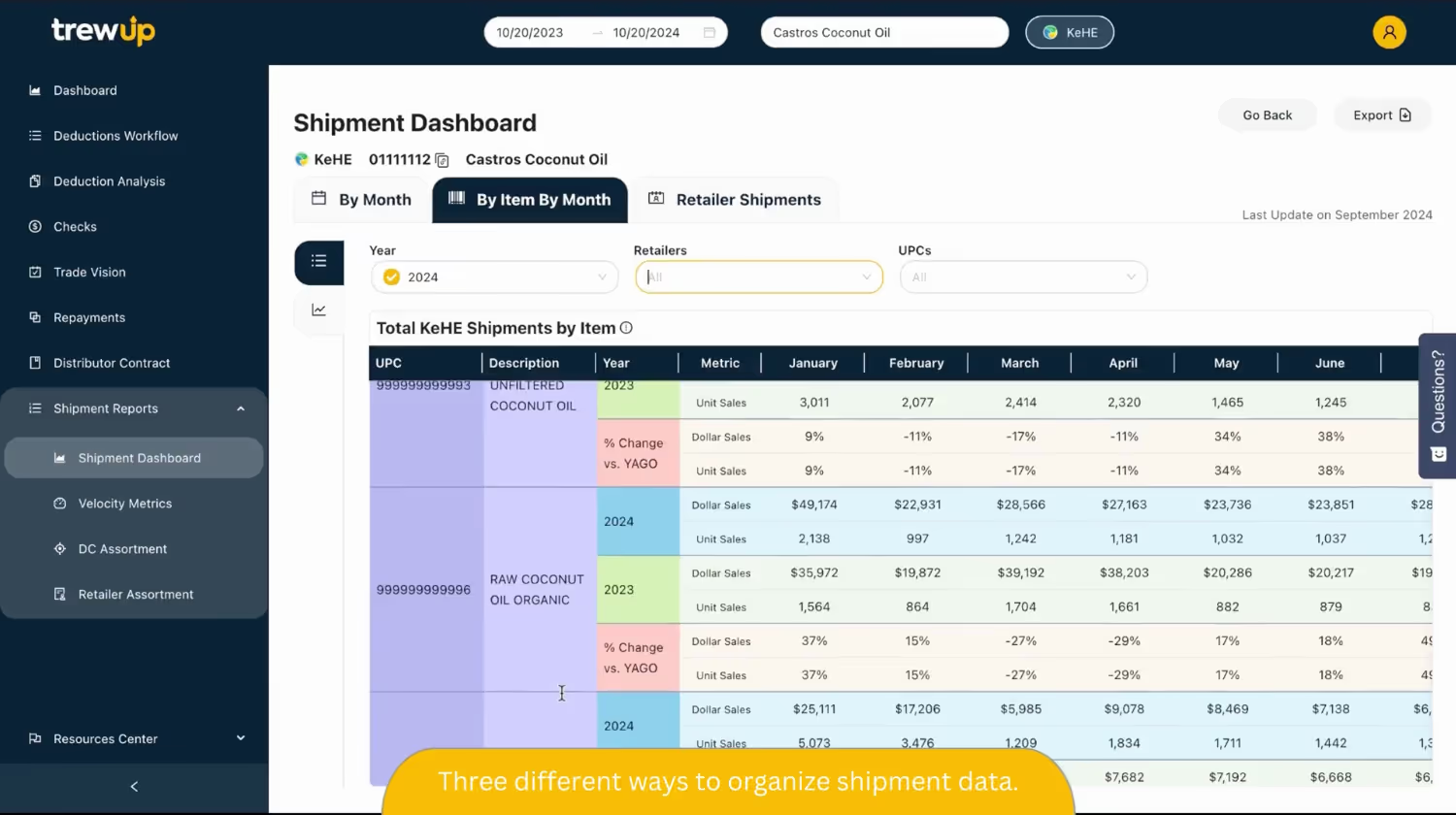
TrewUp surfaces these metrics in live dashboards filtered by retailer and deduction type. Sonoma Creamery found $60K in incorrect deductions on day one. The system flagged those claims immediately after login—deductions that had been sitting in the backlog undetected.
Must-Have Capabilities in a Deduction Management System
Here's what a working deduction management system should deliver:
- Automated data ingestion from distributor portals and email sources (UNFI, KeHE, Kroger)
- Categorization by reason code, retailer, and type without manual tagging
- Contract matching that compares line item deductions against promotional agreements to identify valid vs. disputable claims
- Pattern-based flagging of invalid CPG claims and unauthorized deductions that warrant dispute
- GL-ready output that lets finance close on actuals instead of estimates
A 2026 Gartner survey found that 75% of CFOs expect larger tech budgets this year, even as headcount growth forecasts have dropped to 2%. For mid-market CPG teams, deduction management solutions should deliver workflow relief fast.
Close Faster and Protect More Margin with TrewUp
TrewUp automates the work that turns deduction backlogs into close-time crises. Use it to find where the process breaks down, which claims deserve dispute, and whether your next step is tightening a process or replacing one.
Finance teams close on processed actuals instead of padded estimates. Teams work from the same deduction data, sorted by retailer, type, and dispute status. The month-end debate over whose numbers are right goes away.
Book a TrewUp demo to see how you can reduce write-offs and close with greater confidence.