


The Challenge

As a fast-growing omnichannel coffee brand expanding into retail, Javvy Coffee quickly discovered that managing deductions through distributor portals wasn't built for speed—or visibility.
Shortly after launching with a national distributor in January, a per-unit pricing change wasn't reflected correctly in the distributor's invoicing. The resulting discrepancy compounded into more than $165,000 in incorrect deductions over time.
Identifying the issue was only half the battle. Working through the distributor's legacy deduction portal meant digging through reports, gathering documentation, and navigating a dispute process that was both manual and time-consuming.
At the same time, Javvy's team was new to retail. Having grown primarily as a direct-to-consumer business, they needed a better way to understand retailer deductions, trade spend, accruals, and forecasting as they scaled.
The Turning Point

After KeHE recommended TrewUp, Dave Agan, VP of Sales, implemented the platform to gain better visibility into deductions and simplify the dispute process.
What started as a solution for one large pricing issue quickly became an essential part of how Javvy manages retail operations.
Instead of relying on outdated systems and manually reviewing deductions, the team gained a centralized platform that made it easy to investigate issues, collaborate internally, and recover lost revenue.
The Solution
TrewUp became Javvy Coffee's central hub for deduction management, retailer visibility, and trade spend analysis.
1. Recovering Revenue with Better Deduction Visibility
Using TrewUp's Deduction Analysis feature, the team could quickly identify unusual charges by retailer, deduction type, and distributor.
The pricing error that initially brought Javvy to the platform wasn't the only issue they uncovered. By gaining complete visibility into deduction activity, the team also identified additional deductions tied to a distributor program requirement they hadn't been aware of.
"TrewUp helped me find a lot more hard evidence... as well as additional deductions that we weren't supposed to have." — Dave Agan, VP of Sales, Javvy Coffee
Today, Javvy has recovered:
- $165,588 in repayments
- 22% deduction recovery rate
- 13% of trade dollars recovered
- Across 116 disputed deductions
2. Turning Hours of Work into Minutes

Before TrewUp, disputing deductions through distributor systems was a slow, manual process. Preparing documentation and submitting multiple disputes could consume hours.
With TrewUp, standardized dispute workflows dramatically reduced that effort.
"You can get it done in five or ten minutes compared to... two hours with our old system." — Dave Agan
Instead of avoiding disputes because of the administrative burden, the team now disputes proactively—testing which charges their national distributor will contest and which they'll concede, then focusing effort where it counts.
3. Better Collaboration Across Sales, Finance, and Operations
As Javvy expanded into retail, multiple departments became involved in managing deductions. Using TrewUp's assignment and collaboration features, teams can quickly determine:
- Was product actually shorted?
- Was inventory shipped on another purchase order?
- Has the deduction already been reconciled?
- Does finance need additional documentation?
Rather than relying on lengthy internal meetings, everyone works from the same deduction record—cutting down on the back-and-forth between sales and finance that used to eat up hours each week.

4. Smarter Forecasting and Trade Spend Planning
Beyond deduction management, TrewUp provides visibility that helps the team make better business decisions.
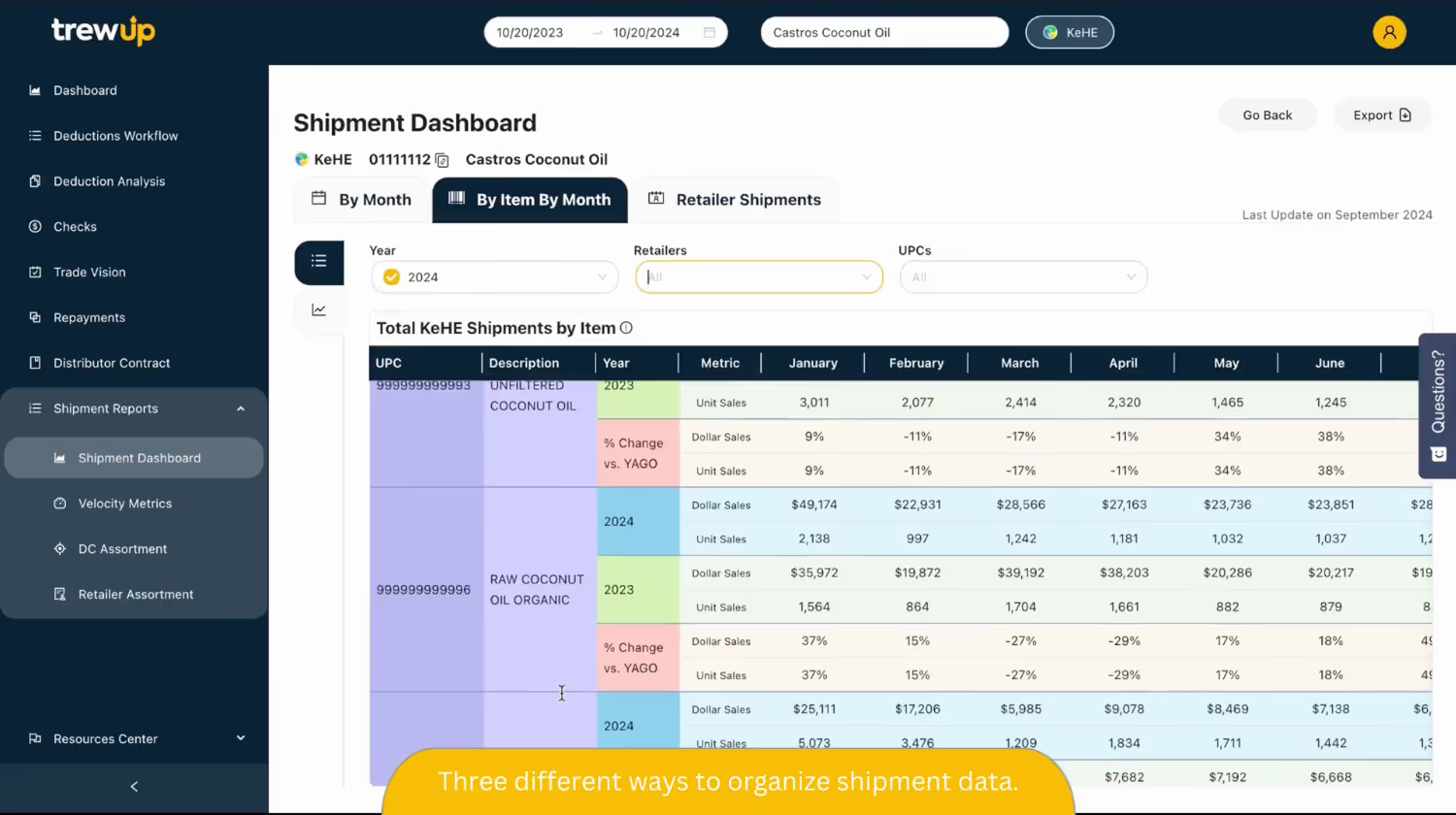
One key insight: Javvy sells cases to their national distributor, but registered point-of-sale velocities don't reflect that. TrewUp surfaces Javvy's true distributor velocities—not just register data—giving the team a clearer view for:
- Inventory forecasting
- Door expansion tracking
- Unit movement trends
- Trade spend planning
- Retail performance
"It provides the clarity... for finance, demand planning, operations, and sales." — Dave Agan
Recovered deductions also feed back into the business directly. As Dave put it, repaid deductions that would otherwise count against trade spend can be reinvested into new trade—turning recovery into a growth lever, not just a cleanup exercise.