TrewUp and Confido both serve CPG Finance and Sales teams, but they're built for different scales. TrewUp is the focused choice for lean mid-market brands ($2M–$20M+ through UNFI, KeHE, and Kroger) that need live trade spend visibility in two weeks with no ERP or TPM. Confido is a broader enterprise platform spanning more of the CPG finance stack.
If you're a Finance Controller, VP of Finance, or CSO at a 10–30 person CPG brand, this page resolves the TrewUp vs. Confido comparison in practitioner terms. We name what we do, where Confido is the better fit, what it costs, and how long it takes to go live.


Deduction management as part of a broader enterprise finance platform, spanning more of the CPG finance stack. It leans heavily into demand planning within TPM — which means Sales must enter and scrub data weekly.
Best fit for teams with spare bandwidth for that admin work.
%201.png)
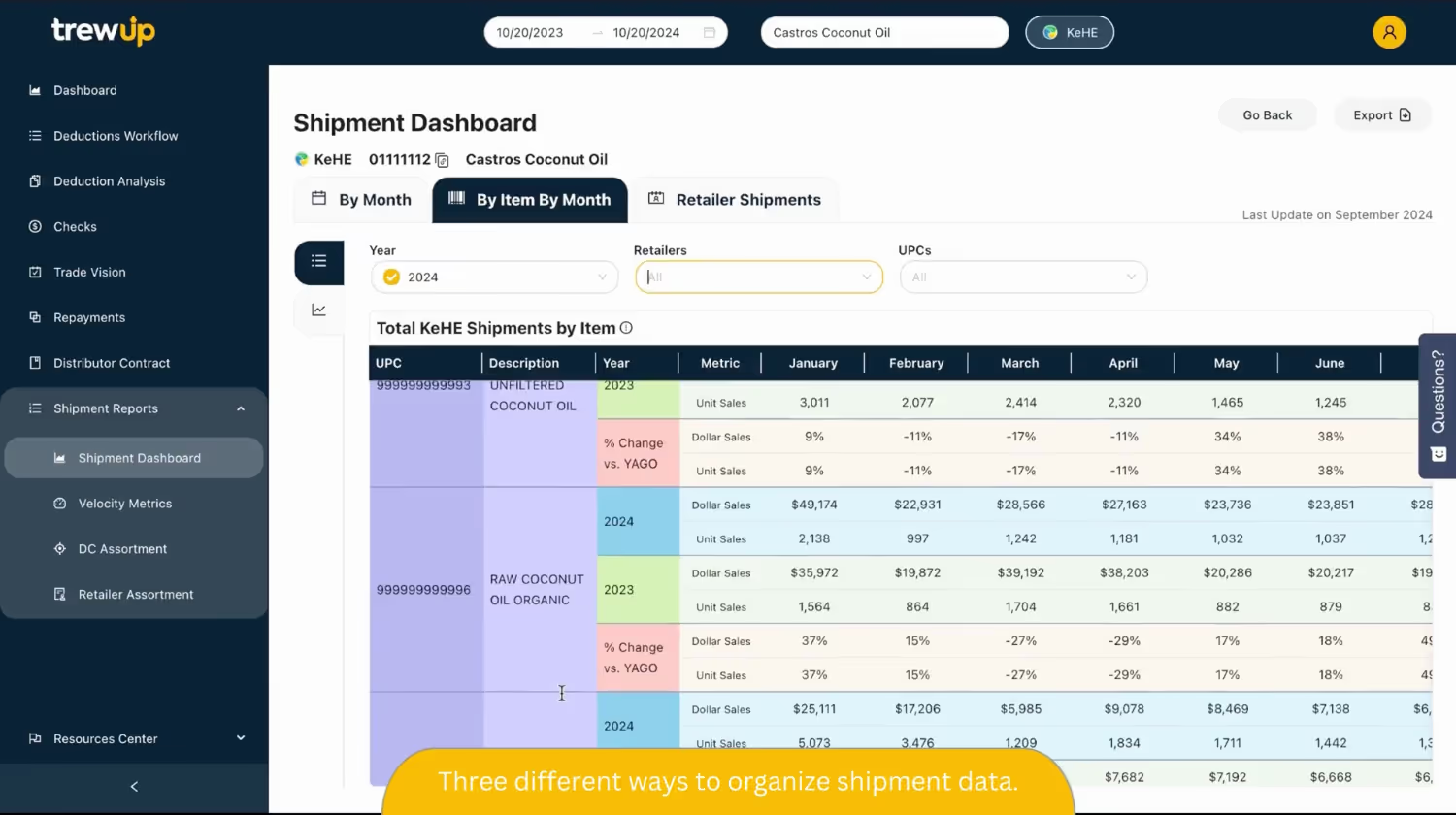
TrewUp is a trade spend visibility, deduction management, and optimization platform built for mid-market CPG brands. We connect deduction, depletion, and trade spend data from UNFI, KeHE, and Kroger into one live system Finance and Sales can act on.
It's built for lean teams that need clean, GL-ready deduction data and retailer-level margin visibility.
No ERP or TPM required.

Live in two weeks · month-to-month · no ERP required to start
The differences that actually drive the choice between TrewUp and Confido for CPG deduction management and trade spend visibility.

TrewUp is a focused trade spend visibility platform for teams moving a large share of revenue through UNFI, KeHE, and Kroger. On those three portals it offers unparalleled depth— UPC-level deduction detail and AI contract matching that checks every line item against the original promotional contract.
Confido is a broader CPG finance platform aimed at enterprise brands. Built for larger scope including trade spend planning, it can be overpowered and unwieldy for lean mid-market teams.
TrewUp connects directly to UNFI, KeHE, and Kroger out of the box — pulling deduction backup, depletion data, and remittance files. Our document reader extracts every line of detail (reason codes, amounts, dates, SKUs) and ties each deduction back to its promotional contract. No custom integration build. No portal-hopping.
Confido publicly references "50+ data sources," but not the depth of its UNFI, KeHE, and Kroger integration. If grocery distributors are where your trade dollars live, ask each vendor to demo against your own backup files.


Two weeks. No ERP, no TPM, no IT team. Initial insights land within days of connection, and you launch with one distributor and expand as you scale.
Confido doesn't state an implementation timeline at all. If onboarding speed and transparency matter to your team, go with TrewUp.
TrewUp publishes a starting price. Our Emerging tier starts at $599/month for brands with up to $2M combined annual revenue across UNFI, KeHE, and Kroger. SMB and Enterprise tiers require a conversation — and all three run month-to-month, no long-term contract.
Confido's deduction management page is demo-gated, so there's no published price to line up next to ours. For a lean team that self-qualifies before a sales call, a published number removes friction.


Processing what arrives is table stakes. The harder problem is finding the deductions that shouldn't be there at all.
TrewUp's AI contract matching checks every line-item deduction against the original promotional contract and flags discrepancies before they hit the GL. Our document reader extracts the full line-level detail from PDFs, images, and portal backup. Historical trend analysis surfaces repeat patterns by retailer, reason code, and SKU so you fix the cause, not just the symptom.
Brad Saunders, Financial Controller at Sonoma Creamery, says: "With TrewUp, we immediately identified $60,000 in incorrect brand name deductions."
Confido publicly cites their ability to flag invalid deductions, but without a way to separate invalid deductions from legitimate ones, avoidable deductions continue.
Your team spends their time patching issues, not truly resolving the cycle that’s draining margin.
With TrewUp, we immediately identified $60,000 in incorrect brand-name deductions.
Brad Saunders
Financial Controller, Sonoma Creamery
TrewUp has given us so much more clarity and conviction with our retail partners. It's no longer debating — it's fact-based: this is what's happening in the business.
Clayton Sayers
Sr. Director, Natural Channel Sales, Hain Celestial
We can confidently say that TrewUp is a game changer. It's been a seamless integration with tremendous impact.
Doon Wintz
CEO, Run-A-Ton Group


Show only the badges TrewUp actually holds — drop SOC 2 / ISO if not yet certified.
No. TrewUp connects directly to UNFI, KeHE, and Kroger without an ERP or TPM. We deliver clean, GL-ready output that imports into QuickBooks, NetSuite, or other accounting systems. Finance and Sales leads own the implementation without involving IT.
TrewUp is purpose-built for mid-market CPG brands (5–30 employees) with $2M–$20M in combined UNFI, KeHE, and Kroger revenue. Current customers include Sonoma Creamery, Vigo/Alessi, Run-A-Ton Group, Koala Eco, and Freestyle Snacks.
Yes. Our AI contract matching flags invalid deductions before they need formal dispute, and collaborative features let teams challenge and resolve discrepancies inside the platform. Jesse Maglott, Deductions Manager at Vigo/Alessi, says of TrewUp: "The platform empowers us to swiftly identify invalid deductions, and the collaborative features have revolutionized our team's communication.
Confido is broad. TrewUp is focused. Confido spans cash application through demand planning. However, that requires Sales teams to focus their limited time on entering plans and updating them on a regular weekly or monthly basis. Planning data must be entered and scrubbed frequently, or the tool produces misleading data. This pulls Sales away from achieving revenue targets and causes unnecessary frustration.
TrewUp covers execution, deductions, accounting, trade visibility, post-promotion analysis, and optimization, with deep connections to UNFI, KeHE, and Kroger and a two-week implementation. Best of all, its contract matching feature removes the need to constantly monitor sales plans. Deductions are matched to the contract submitted to the retailer, no forecasting or demand planning required. The Sales team focuses on selling, and the Accounting or Admin team has all the data they need to manage and optimize deductions in real time.
Yes, for mid-market CPG brands focused on trade spend visibility, deduction management, and optimization across UNFI, KeHE, and Kroger. Confido publicly positions itself as a broader CPG finance platform. TrewUp unifies the trade spend lifecycle stages:
Legitimate deductions get reconciled to plans, and the avoidable deductions cycle stops repeating.
TrewUp also features deep integration with UNFI, KeHE, and Kroger out of the box, pulling 12 months of historical data from day one. It matches deductions to retailer contracts to save teams time and unify them on a single source of truth.