
You're digitizing forecasting and logistics, but trade spend actuals stay hidden until month-end. When you’re missing the settlement layer in your standard digitization roadmap:
- Post-invoice deductions arrive late
- Finance teams face growing backlogs
- Rushed reconciliation leads to conservative write-offs
- Accrual variances reduce close confidence
This guide helps you digitize the CPG supply chain by showing you how to:
- Prioritize for the highest cash impact.
- Sequence work across 90 days, even with a lean team.
- Run weekly KPIs on deduction status and accrual accuracy.
We’ll also show you how connecting trade spend performance data can address gaps and help with forecast accuracy.
Main Takeaways
- CPG digitization requires four layers: plan, move, sell, and settle.
- Retailer compliance deadlines and rising promo volume are compressing digitization timelines.
- Start digitization where cash impact is fastest. Post-invoice deductions often deliver quicker returns than planning systems.
- Weekly reporting on KPIs catches problems before month-end close.
- Evaluate settlement tools by time-to-value, portal ingestion, and data normalization quality.
What is CPG Supply Chain Digitization?
.webp)
Digitization unifies data flows that connect planning and settlement. It matches trade spend to actual deductions so you can confirm margin and close with confidence.
Effective CPG supply chain digitization covers planning, execution, and settlement work, including:
- Forecasting and inventory optimization
- Warehouse and transportation management
- Retail execution tracking and promo compliance
- Deduction processing and chargeback reconciliation
The following table breaks down the four layers of CPG supply chain digitization.
Layers of CPG Supply Chain Digitization
ERP, TPM, and WMS/TMS vendors cover planning and execution systems well. But most brands still run the settlement layer with spreadsheets and manual portal pulls. This causes backlogs and opens the way for input errors.
Retail Pressures are Compressing Timelines
.webp)
Retailer mandates are increasing. Promotions are more intense. Working capital is tight. These factors are pushing digitization to speed up faster than federal rules alone.
FDA enforcement of FSMA 204 is delayed until July 2028, but major retailers are moving sooner. The Wall Street Journal reports that Walmart changed OTIF thresholds in 2024, targeting 90% on-time and 95% in-full, with a 3% fine for shortfalls.
Retailer expectations—not regulations—set the real timeline for item, shipment, and lot data. This means fines hit margin right away, making fast root-cause analysis and document retrieval critical.
US promo intensity rose from 25.1% to 28.6% of products sold on promotion, according to NIQ. More promotions mean more billbacks, more scan-downs, and more retailer claims to reconcile. Manual work can't scale with this volume.
Your 90-Day Digitization Roadmap
Multi-year transformation plans assume large budgets and extra headcount. MHI and Deloitte report that 42% of supply chain leaders plan to spend over $10 million in tech investments.
Mid-sized CPG brands need quick wins that fund the next phase. Post-invoice actuals work often delivers faster ROI than upstream planning systems. The data already exists; it's just stuck in portals and PDFs.
Prioritize digitization efforts to get faster value by asking:
- Cash impact: Which process, if digitized, recovers dollars or avoids write-offs within 90 days?
- Retailer readiness: Which data flows do your largest retail partners require?
- Time-to-value: Which tools can be implemented in weeks rather than months?
Why the Settle Layer Delivers ROI Before Planning Systems Do
Planning and execution systems have clear vendor categories. Post-invoice actuals, however, lack a standard label. Finance teams often treat deductions as AR cleanup, not the truth for trade spend.
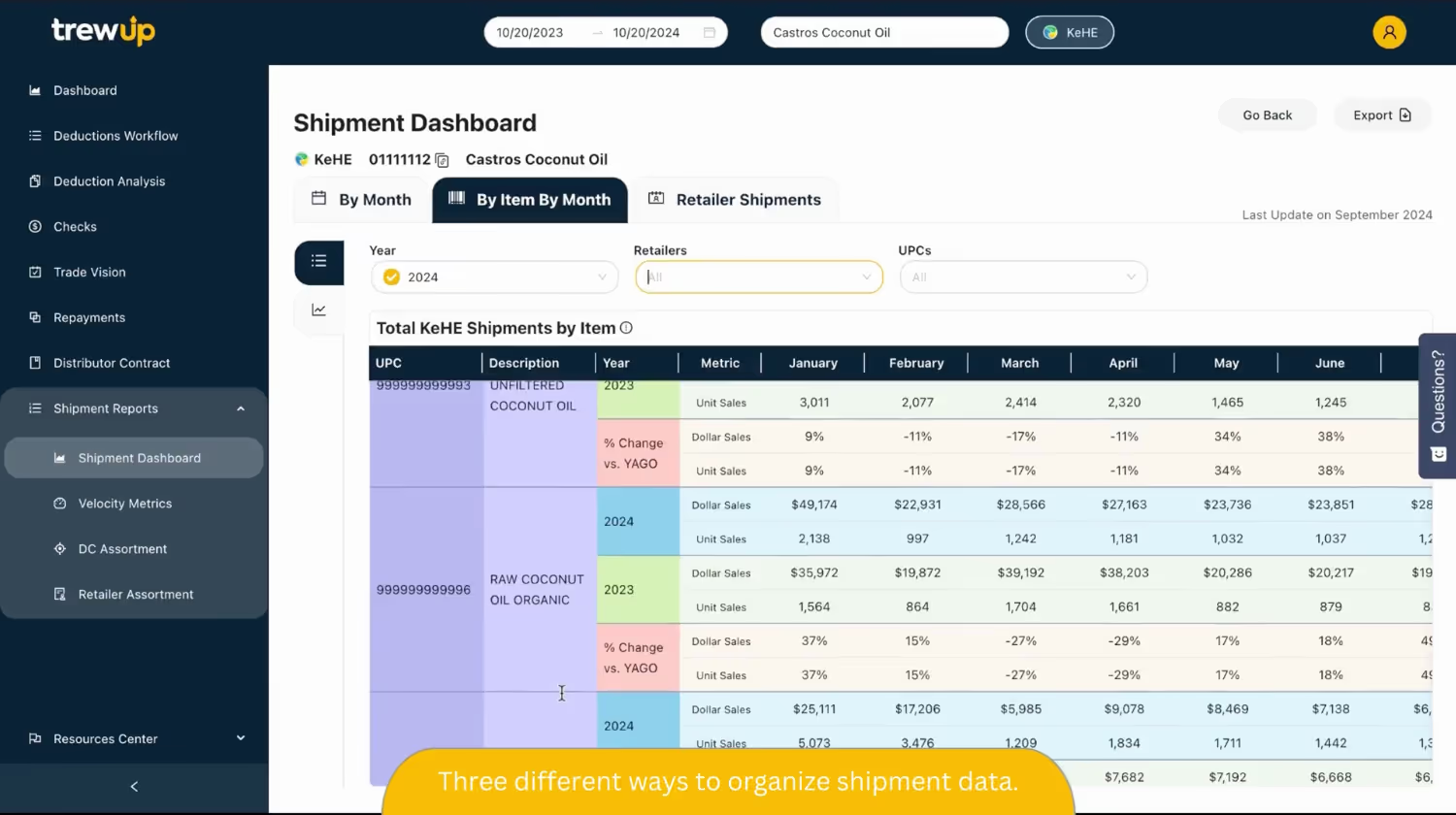
Digitizing this layer moves you from manual monthly reconciliation to weekly KPI visibility. With TrewUp, you can track expected vs. actual trade spend, organized by retailer, promotion, and SKU.
With clear visibility into your deductions history, you can see the complete picture of product performance, from warehouse to shelf. This means better demand planning and inventory optimization.
Here's a 90-day roadmap for digitization, including deliverables and weekly KPIs for each phase.
90-Day Roadmap for Digitizing Supply Chain Settle Layer
.webp)
Weekly KPIs To Bridge Finance & Sales on Trade Spend Health
.webp)
Monthly reporting finds problems after margin damage is locked in. Weekly KPIs show backlog spikes, missing docs, and accrual drift early enough to fix before write-offs or close surprises.
Core KPIs for finance and operations alignment are:
- Backlog age bands: Total deductions open by age in both dollar value and count
- Missing documentation rate: Percentage of deductions lacking proof-of-performance, backup invoices, or resolved reason codes
- Dispute cycle time: Average days from dispute filed to resolution
- Win rate and recovery rate: Percentage of disputes won; dollars recovered as a percentage of dollars disputed
- Write-off split: Difference between "valid" write-offs and those written off because you couldn't validate in time
- Accrual variance: Gap between planned trade spend and actual deductions by retailer and promotion
- Days to promo actuals: Latency from promotion end to confirmed actuals in your system
If you can't report a KPI from this list, that's a digitization priority.
When reporting to leadership, tie each weekly KPI to an ROI framed around:
- Recovered dollars from disputes
- Headcount avoidance from automation
- Faster close from lower accrual variance
When auditors gain confidence in trade spend reporting, you get better financial outcomes.
Examples of Digitization Impact in CPG
.webp)
Below are real-world examples of how digitization supports savings.
A natural products brand digitizes ASN and lot-code data flows to meet Walmart's August 2025 FTL traceability deadline. This reduces compliance chargebacks and meets GS1 Sunrise 2027 2D barcode requirements.
A legacy food brand automates deduction management and analysis workflows. The result is a 57% time savings. Analytics dashboard clarity enables better negotiations and an 8% trade spend savings.
A cheese-based snack company matches distributor scan data to promotions. The system finds $60,000 in wrong deductions within the first 30 days. This lets users file disputes during the recovery window.
Supply Chain Software Categories & Evaluation Criteria
Ernst & Young reports that 47% of CPG leaders see supply chain transformation as a top value. To lock in the best fit for your company, evaluate digitization tools by layer, time-to-value, and fit with current systems.
Emerging brands usually begin with inventory management systems. However, they often outgrow these systems as their deduction volume increases. The actuals layer is separate from both inventory work and TPM planning.
CPG Supply Chain Platform Overview
Evaluation criteria for the settlement/actuals layer:
- Time-to-value: Can you implement in weeks?
- Portal/PDF handling: Does the tool ingest data from distributor portals and PDF remittances automatically?
- Normalization quality: Are deductions categorized by retailer, SKU, promotion, and reason code?
- Audit trail: Is data GL-ready with clear documentation links?
- AR impact: Does the tool reduce backlog age and improve recovery rates?
TrewUp’s deduction management platform explains short payments, manages disputes, and reconciles deductions to promotions. It doesn't replace your ERP, TPM, or WMS, but it connects seamlessly to UNFI, KeHE, and Kroger to automatically extract and categorize deductions daily.
Go From Roadmap to Weekly Actuals with TrewUp
Digitization protects margins and builds confidence. But this works only if post-invoice actuals are current, structured, and visible. Automating settlement saves time and effort, reduces manual-entry errors, and enables weekly KPIs that prove ROI.
TrewUp digitizes the commercial actuals layer by:
- Ingesting deduction and remittance data from portals and PDFs
- Categorizing deductions by retailer, SKU, and promotion
- Showing results in live dashboards that align finance and sales teams
Teams see exactly what’s happening with automated categorization by type, reason, and customer. Operations sees the deductions affecting them in real time, like logistics fines, so they can adjust as needed. Finance maintains accurate accruals and can spot margin erosion and adjust accordingly.
For weekly KPI visibility with live deduction actuals, no IT team needed, book a demo.