

Most CPG supply chain models end when the product reaches the shelf. For Finance teams, the chain ends when deductions clear and chargebacks reconcile. Your CPG supply chain stops at settlement. Tariffs shift costs while promotional cycles distort demand signals. The manual volume-to-dollar conversion between supply chain and finance makes both worse. Execution failures create margin leaks at sourcing, promotional, and settlement stages.
Main Takeaways
- The CPG supply chain doesn't end at delivery. It ends when deductions clear and chargebacks reconcile.
- Tariffs shift COGS while promotional cycles distort demand signals. Manual processes make both worse.
- Every operational breakdown eventually shows up as a line item Finance has to process.
- To protect margin, you need visibility into what's happening between shipment and settlement.
How the CPG Supply Chain Works

The CPG supply chain covers every step between raw material procurement and final collection. It starts with CPG sourcing for ingredients and packaging. Product then moves through co-packer or in-house manufacturing. From there, inventory stages at distribution centers. It ships through CPG distribution channels like UNFI, KeHE, Kroger, and regional retailers before landing on the shelf.
But for the teams managing the money, there's a stage most guides skip: financial settlement. Trade deductions, chargebacks, and billbacks flow from distributors and retailers later.
The CPG supply chain at most mid-market brands looks nothing like textbook org charts. If you're running a $5M–$50M brand, you likely don't have a production or warehouse manager. Co-packers, 3PLs, and distributors move your product instead. CPG supply management at your scale means keeping visibility and financial control across partners you don't own.
Every breakdown—a late shipment, a bad production run, a stockout during a promo—shows up as a line item Finance must process. The table below maps each stage to the risk your P&L absorbs when execution slips.
CPG Supply Chain Stage Risks
What Makes CPG Supply Chains Different

Velocity sets CPG apart from nearly every other supply chain category. Replenishment cycles run weekly. SKU counts are high. Shelf-life limits create constraints that durable goods never face.
On top of that speed, retailer compliance programs layer in real financial exposure. OTIF scorecards, labeling rules, and tight delivery windows mean a single miss can trigger a chargeback. For example, Target's OTFR policy charges a 3% COGS fine for late receipts, per WarehouseQuote. Similar programs exist across major retailers.
The sheer volume of financial claims per shipment is higher than in most industries. Every promotional cycle creates trade deductions. Every compliance miss creates chargebacks. Every spoilage event creates claims. All of it flows back to your Finance team long after the product left the warehouse. Stopping your supply chain model at the shelf means missing the stage where margin actually gets settled.
2026 Supply Chain Challenges in CPG: Where Margin Leaks

Every supply chain challenge carries a financial cost. In 2026, four major pressures are stacking those costs faster than most mid-market teams can process them.
Sustainability Compliance Creates New Chargeback Categories
Consumer and regulatory pressure creates new compliance categories and potential deduction sources. The demands for eco-friendly packaging, ethical sourcing, and carbon footprint reduction are rising. Major retailers now tie vendor scorecards to environmental performance. This makes sustainability a direct margin factor.
Tariffs Drive Live COGS Volatility
Tariffs aren't a planning exercise. They're a live cost headwind. For CPG brands, those COGS shocks flow quickly into pricing changes, promo funding shifts, and higher deduction volume. If your sourcing model hasn't changed since 2023, you're losing money. Finance is taking in the variance as write-offs and unrecovered deductions.
Omnichannel Demand Fragments Inventory Planning
eGrocery captured 16.3% of weekly grocery spend in October 2025, per Brick Meets Click. If your demand planning and forecasting treat online as overflow from store volume, you're creating stockout risk.
Online velocity differs from in-store patterns by SKU and region. Safety stock calculations based on total volume miss channel-specific demand spikes. When you can't fulfill promotional commitments across all channels, those trigger compliance fees.
Distributor Data Lag Creates Visibility Gaps
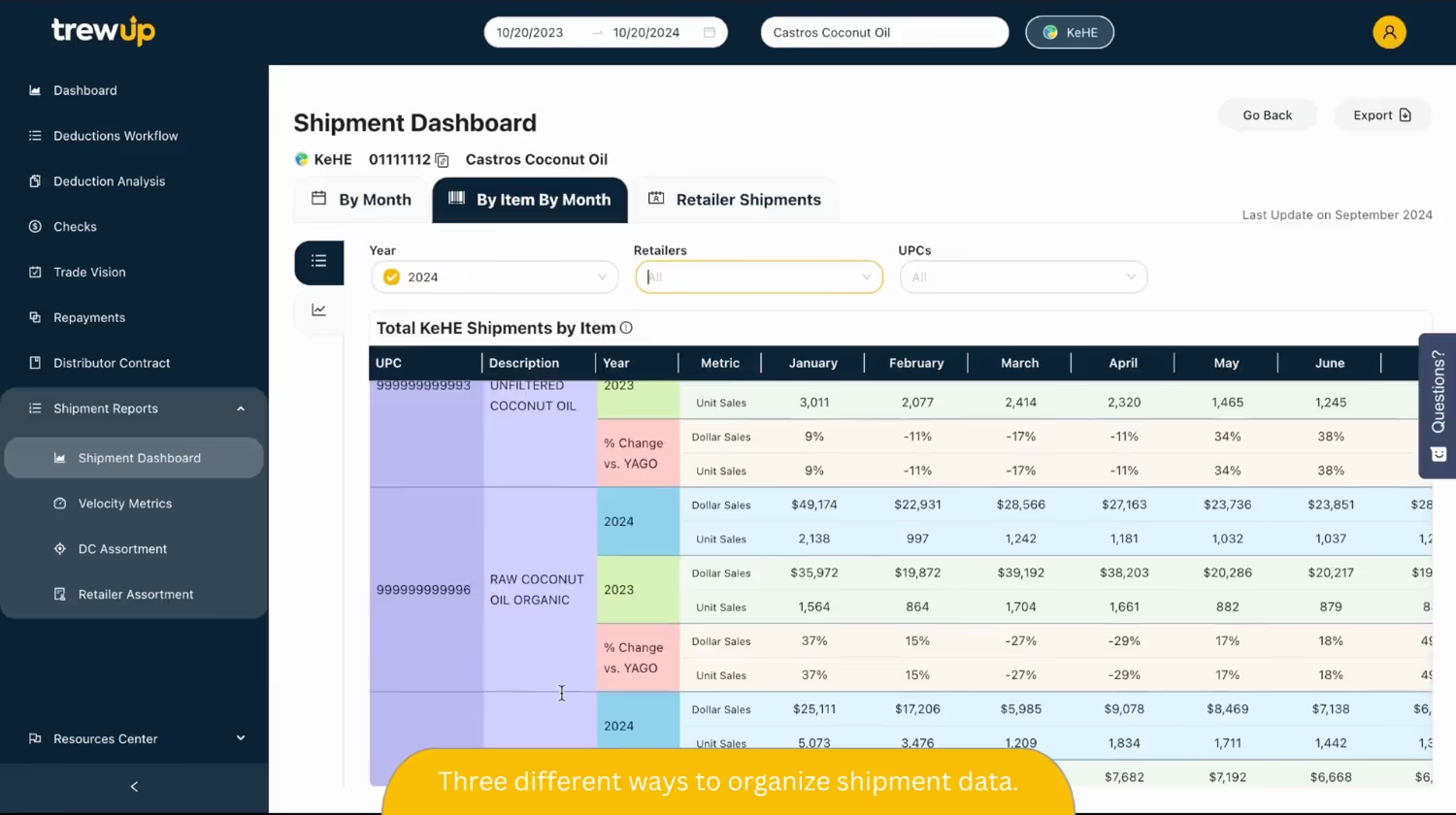
The co-packer and distributor visibility gap makes all other challenges worse. You don't control what your co-packer shipped yesterday or what's sitting in UNFI's DC. What's actually on the shelf at Kroger is just as opaque. Your ERP records the invoice but doesn't show what's on the shelf or what's coming back as a deduction.
The gap between what your systems reflect and what's actually happening in distributor portals is where margin leaks hide. Only 23% of supply chain groups have a formal AI strategy to close that gap, per Gartner.
Quick visibility check:
- Do you know what your co-packer shipped this week?
- Can you see deductions by SKU before month-end close?
- Do you know which promotions create chargebacks versus driving sell-through?
If you can't answer those with confidence, you have a visibility problem. The role of technology in CPG supply chain operations starts with connecting what shipped to what you actually collected.
Inventory Management Challenges Stack
Stockouts remain one of the most costly and measurable failures in CPG. Out-of-stock issues cost US retail $48 billion in the 52 weeks ending September 2023, per NIQ. Blunt inventory cuts risk higher OOS rates and more compliance fees. The fix isn't less inventory. It's SKU-level visibility into what's moving, what's sitting, and what's about to trigger a stockout during a live promotion. Safety stock decisions made at the total level miss item-level reality.
Tariff-driven COGS shifts hit your P&L at the same time promotional cycles distort demand signals. If your visibility into deductions and inventory lags by even two weeks, you're closing the month on numbers you can't trust.
CPG Supply Chain Management That Protects Margin

Good CPG supply chain management ties every operational decision to a financial outcome. Where you source, how you forecast, and how you work with distributors all feed that number.
Sourcing and Risk Management:
- Dual-source key ingredients to reduce single-supplier dependency.
- Evaluate nearshore alternatives before tariff pressures force reactive decisions.
- Model tariff scenarios into your COGS projections with built-in buffer.
- Update supplier agreements to include sustainability compliance requirements.
Demand Planning and Forecasting:
- Include promotional lift data, omnichannel allocation, and distributor sell-through data.
- Forecast based on what actually sold, not what you shipped.
- Set SKU-level safety stock by retailer and channel to avoid promotional stockouts.
- Build demand signals from both in-store and eGrocery velocity patterns.
Co-packer and Distributor Management:
- Scorecard 3PL compliance the same way retailers scorecard you.
- Build deduction review cadences into your weekly ops rhythm, not just your month-end close.
- Establish clear dispute ownership and tracking across all distributor relationships.
- Require co-packers to provide real-time shipment visibility.
Financial Settlement Controls:
- Treat deduction management as a supply chain financial control, not a back-office cleanup task.
- Connect distributor data straight to your finance workflow.
- Track deductions by retailer, SKU, and reason code in real time to catch margin erosion before it compounds into write-offs.
- Automate GL-ready categorization to close on actuals instead of estimates.
Protect margin with visibility into what's happening between shipment and settlement. The Run-A-Ton Group cut 20 hours per week from their deduction workflow by making exactly that connection through TrewUp.
Manage Supply Chain Complexity and Protect Margin with TrewUp
TrewUp unites distributor data, deduction documents, and promotional actuals into a single workflow. Your team catches margin erosion at the settlement stage before it compounds into write-offs. Finance and Sales operate from the same deduction and depletion data. Closing gets faster because deductions are sorted and disputes are tracked. Accruals reflect what's actually happening in distributor portals, not what your ERP assumes.
Start protecting margin with real-time deduction visibility. Explore TrewUp's CPG Supply Chain Managed Service to see how.